
Why Athletes React Late Despite "Perfect" Vision
Why Does My Athlete React Late Even With 20/20 Vision?
Your athlete sees the ball.
They simply seem to see it a fraction of a second too late.
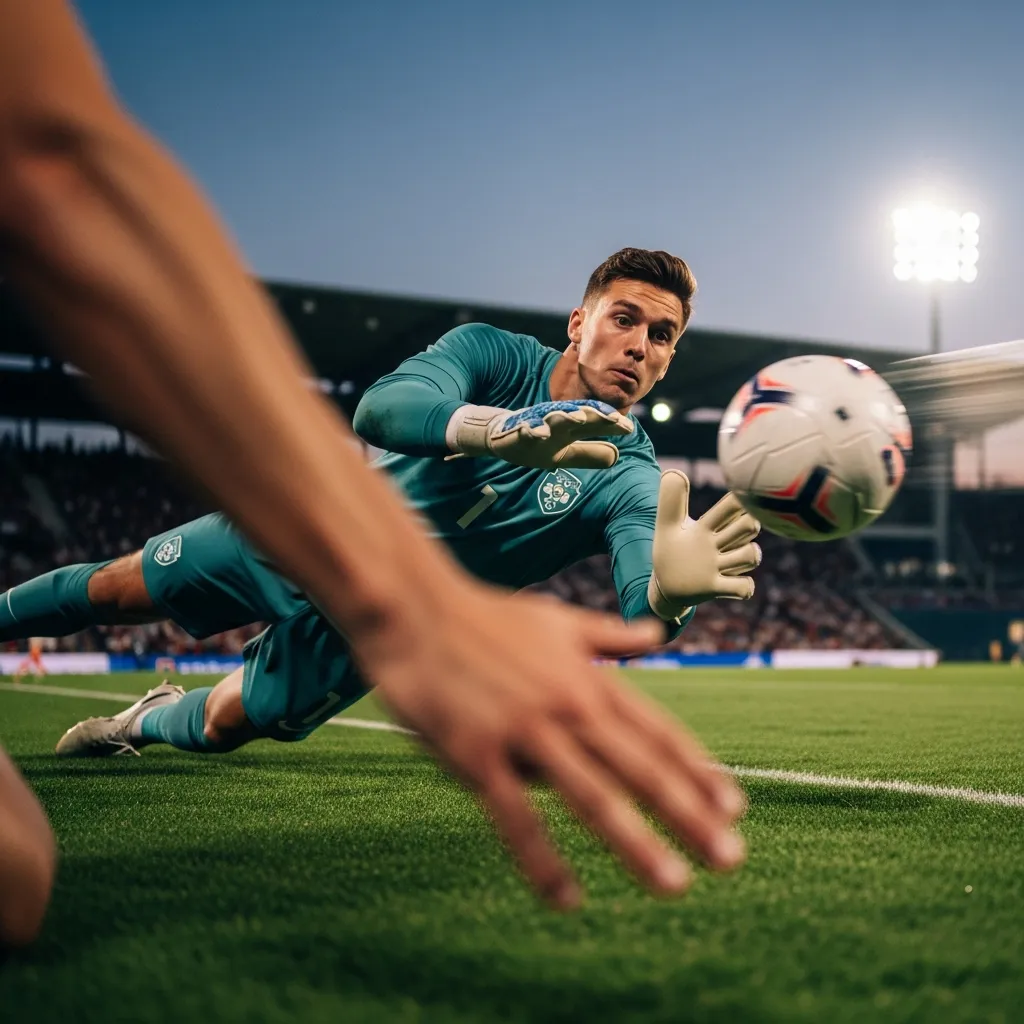
The baseball player starts the swing after the pitch is already in the hitting zone. The goalkeeper recognizes the shot but cannot move quickly enough. The basketball player catches well during an isolated drill but loses the pass when defenders and teammates fill the court.
More physical practice is often the first response. That may be appropriate—but athletic reactions do not begin in the muscles.
They begin with visual information.
Before the body can respond, the athlete must locate the relevant cue, separate it from surrounding distractions, judge its speed and direction, anticipate what may happen next, select a response, and guide the body into action.
Why isn’t 20/20 vision the whole story in sports?
Twenty-twenty visual acuity measures how clearly an athlete can identify a stationary target under controlled conditions. Sports demand much more: tracking movement, judging depth and speed, shifting focus, using peripheral information, maintaining binocular coordination, and directing an accurate physical response—often within a fraction of a second.
Static clarity remains important. An athlete cannot consistently respond to information they cannot see clearly.
However, a traditional eye chart does not fully evaluate how vision performs when:
The athlete is moving
The target is moving
Several objects compete for attention
The athlete must monitor central and peripheral information
Fatigue increases
A rapid decision must become an accurate movement
An athlete can therefore have healthy eyes and 20/20 acuity while still having opportunities to improve specific visual-performance abilities.
What happens before an athlete reacts?
An athletic reaction includes several stages: detecting the cue, interpreting its meaning, choosing a response, and executing the movement. A delay can occur at any point. What looks like slow hands or feet may involve visual detection, processing, anticipation, decision-making, physical execution, or a combination of factors.
Consider a hitter facing a pitch.
The athlete must quickly:
Locate the release point.
Detect the ball against the background.
Track early movement.
Estimate speed, direction, and likely location.
Decide whether to swing.
Coordinate the eyes, head, hands, and body.
Adjust the movement as new information arrives.
In open, fast-moving sports, the athlete rarely reacts to a single isolated stimulus. They must identify which information matters while ignoring what does not.
That is why reaction time on a light board and reaction time during competition are related—but not identical.
What does neurovision mean in athletic performance?
Neurovision is a practical way of describing how the visual system and brain work together to guide action. In sports, it includes detecting visual information, directing attention, anticipating movement, making a decision, and coordinating the body’s response. It is not a single diagnosis or a promise of superior performance.
Good sports vision is not simply having “fast eyes.” The athlete must convert perception into useful movement.
Relevant visual skills may include:
Dynamic visual acuity
Depth perception
Peripheral awareness
Eye-tracking control
Near-far focusing flexibility
Binocular coordination
Contrast sensitivity
Visual reaction time
Eye-hand or eye-foot coordination
Visual anticipation and decision speed
The demands differ by position and sport. A baseball hitter, soccer goalkeeper, point guard, hockey player, and competitive shooter do not use vision in exactly the same way.
Meaningful testing and training should reflect those differences.
What can parents and coaches notice?
An athlete with a visual-performance weakness may react later than expected, lose track of a moving target in traffic, misjudge distance, perform better in predictable drills than live play, or show declining accuracy as fatigue builds. These patterns do not prove a vision problem, but they can guide further evaluation.
Possible observations include:
Frequently swinging late
Struggling more with smaller or faster balls
Losing the ball when several players cross the visual field
Being surprised by opponents approaching from the side
Misjudging passes, rebounds, or fly balls
Turning the head excessively to follow play
Performing well in drills but inconsistently in games
Showing reduced eye-hand coordination late in competition
Hesitating before responding to an obvious cue
Avoiding play on one side of the body
Reporting intermittent blur or double vision
Developing headaches, eye fatigue, or excessive blinking
Coaches may also notice that an athlete understands what to do after watching video but cannot access the same information quickly enough during live play.
Is every delayed reaction caused by vision?
No. Athletic reaction depends on coaching, technique, strength, speed, experience, sleep, attention, confidence, injury status, and the complexity of the situation. Vision is one component of performance. An evaluation should identify whether a measurable visual factor exists rather than assuming training is needed.
A late swing may reflect timing mechanics. A missed pass may result from poor positioning. An athlete may hesitate because they are still learning the system or are afraid of contact.
This is why sports vision should be collaborative.
Dr. Weinberg’s findings can complement the work of coaches, athletic trainers, physical therapists, occupational therapists, physicians, and other members of the performance team. The purpose is to supply better information—not to replace sport-specific coaching.
What does a sports vision evaluation measure?
A sports vision evaluation begins by confirming visual acuity, prescription needs, binocular function, and eye health. It can then examine performance abilities relevant to the athlete’s sport and position, such as tracking, depth judgment, peripheral awareness, focusing flexibility, visual reaction time, and visually guided coordination.
Testing may include:
Distance and near visual acuity
Refractive status
Ocular health
Eye alignment and binocular coordination
Depth perception
Eye-movement accuracy
Focusing speed and flexibility
Peripheral awareness
Dynamic visual acuity
Contrast sensitivity
Visual-motor reaction
Eye-hand coordination
Sport-specific visual decision tasks
This distinction matters. Sports vision performance testing builds upon comprehensive eye health care; it does not replace it.
An athlete with an untreated prescription, eye disease, binocular disorder, or ocular injury needs appropriate eye care before performance enhancement becomes the priority.
Can sports vision training improve reaction time?
Research on sports vision training is promising but not uniform. Recent reviews report improvements in selected outcomes such as visual-motor reaction, eye-hand coordination, and some sport-specific tasks. Results vary by training method, sport, athlete, outcome measure, and study quality, so no program should guarantee competitive improvement.
A 2024 systematic review found generally positive findings but also substantial variation among interventions and studies. More recent reviews of stroboscopic training reported potential improvements in reaction-time measures, while transfer to complex decision-making and actual competition remained less certain.
That limitation is clinically important. Becoming faster at a training device does not automatically guarantee better performance on the field.
Effective Sports Vision Training Cleveland programming should therefore:
Begin with measurable baseline performance
Match drills to the athlete’s sport and position
Integrate visual demands with movement
Increase complexity progressively
Include decision-making rather than reaction alone
Retest the abilities originally measured
Coordinate with regular sport practice
The goal is meaningful transfer—not simply producing a better score on equipment.
Is sports vision training the same as vision therapy?
Not exactly. Sports vision training is generally performance-oriented and may be used with healthy athletes who want to develop sport-specific visual abilities. Optometric vision therapy is prescribed to address a diagnosed functional vision disorder. Some equipment or activities may overlap, but the clinical goals and treatment rationale differ.
When discussing vision therapy benefits, claims should remain tied to the diagnosed condition and measured visual function.
Vision therapy is an individualized, doctor-supervised program—not a generic collection of eye exercises. Sports vision training is also individualized, but it may emphasize reaction, peripheral awareness, dynamic visual processing, and integration with athletic movement.
An athlete may need one, the other, both in sequence, or neither.
What if reaction time changed after a head impact?
A sudden decline in reaction time, balance, vision, concentration, or coordination after a bump, blow, or jolt may indicate concussion and should not be treated as a performance-training problem. The athlete should be removed from play and evaluated according to appropriate concussion protocols before returning to sport.
The CDC lists slowed reaction time, vision problems, dizziness, balance difficulty, light sensitivity, headache, and concentration problems among possible concussion signs and symptoms.
Emergency attention is needed for danger signs such as worsening headache, repeated vomiting, seizures, increasing confusion, inability to wake, weakness, slurred speech, one pupil appearing larger, or double vision.
Sports vision training should never be used to bypass medical clearance.
FAQs
Can an athlete have 20/20 vision and still react late?
Yes. Static visual acuity does not fully measure tracking, peripheral awareness, depth judgment, visual decision speed, or how efficiently perception becomes movement.
Does sports vision training guarantee better game performance?
No. Training may improve selected measured abilities, but transfer to competition varies. Coaching, physical skills, experience, decision-making, and sport-specific practice remain essential.
Is sports vision training only for elite athletes?
No. Youth, recreational, collegiate, and professional athletes may be evaluated. Testing and training should be appropriate for the athlete’s age, sport, position, and goals.
Should an athlete train through visual symptoms after a concussion?
No. New vision problems, slowed reactions, dizziness, light sensitivity, or balance changes after a head impact require appropriate concussion assessment and management.
Call to action
If an athlete sees clearly but continues to lose the ball in traffic, misjudge distance, react late, or struggle when game speed increases, Forest City Vision can evaluate whether a measurable visual-performance factor is contributing.
Schedule a Sports Vision Evaluation with Dr. Zach Weinberg in Beachwood, Ohio.
Call: (216) 468-8020
Learn more: visiontherapycleveland.com
Editor’s source note
The peer-reviewed Role of Sport Vision in Performance: A Systematic Review examines visual-performance testing and training across sports while noting variation in methods and evidence quality.
The 2025 peer-reviewed meta-analysis of stroboscopic visual training reports effects on reaction-time and movement-accuracy measures while discussing limits in transfer and study consistency.
The CDC HEADS UP concussion guidance, updated September 15, 2025, lists vision problems, slowed reaction time, dizziness, balance problems, and concussion danger signs.
The American Academy of Ophthalmology’s Sports Eye Safety guidance, updated March 11, 2025, provides recommendations regarding protective sports eyewear and eye-injury prevention.


