
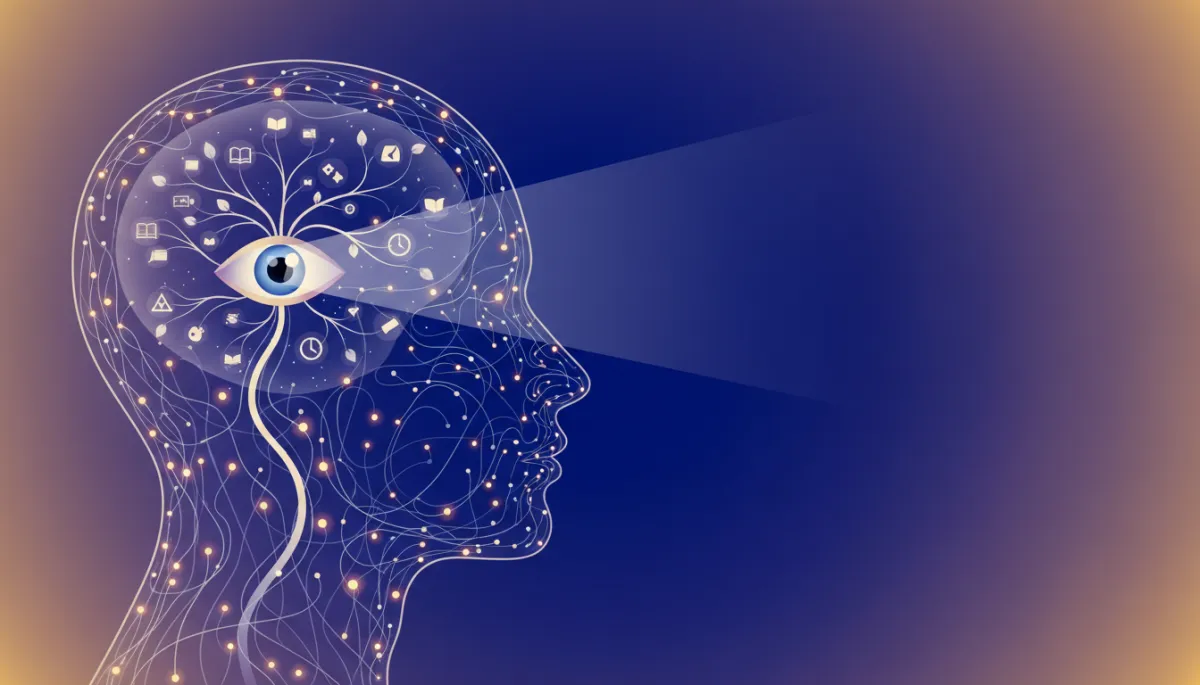
Vision and Memory: The Hidden Connection
Vision Therapy, Neuroscience, Memory
How Vision Shapes What We Remember: The Hidden Link Between Sight and Memory
We tend to think of memory as something that happens “in our head,” yet it is deeply rooted in what we see. From childhood learning to everyday recall, vision quietly drives how we store, organize, and retrieve experiences.
Vision: The Brain’s Primary Information Highway
Around half of the brain’s neural tissue is involved in processing visual information. That makes vision far more than just “seeing clearly.” When light hits the retina, signals travel through the optic nerve to multiple brain regions, including the visual cortex at the back of the head and memory-related areas such as the hippocampus and parietal lobes. This integrated network allows us not only to recognize what is in front of us, but also to connect it with what we already know and store it for future use.
Because so many brain systems are activated by visual input, vision acts as a powerful organizer of experience. It provides the structure, context, and detail that make an event memorable rather than fleeting. In neuroscience terms, vision supports encoding (taking in information), consolidation (stabilizing it in the brain), and retrieval (calling it back later).
Why Visual Information Is So Easy to Remember
Humans are naturally visual learners. Studies consistently show that we are more likely to remember information when it is presented as images or paired with visual cues. This is sometimes called the picture superiority effect: pictures tend to be remembered better than words alone. From a brain perspective, images are rich, multi-layered stimuli. They carry color, shape, spatial relationships, and emotional tone all at once, giving the brain many different “hooks” to grip when forming a memory trace.
When you recall a childhood home, for example, you do not retrieve a list of facts. Instead, you “see” the front door, the staircase, the way the light fell into the kitchen. These internal mental pictures are a form of visual imagery, and they are central to how autobiographical memories are stored. Vision gives memory a stage, props, and scenery, not just a script.
Vision’s Vital Role in Building Strong Memory Pathways
Vision does not work in isolation; it collaborates with attention, language, and emotion. But it often leads the way. When vision functions efficiently, it helps the brain filter what matters, track details over time, and link new information to existing knowledge. When it does not, memory frequently suffers—even if eyesight itself seems “fine” on a basic eye chart.
Visual attention allows us to focus on the right details—such as a teacher’s notes or a road sign—so the brain can encode them accurately.
Eye movements (saccades and tracking) help us scan text, scenes, and faces in a stable, organized way, which is essential for building coherent memories rather than fragmented impressions.
Visual-spatial skills enable us to remember where things are in relation to each other—where we parked the car, where a key idea sits in our notes, or how a diagram is laid out.
When any of these visual functions are weak, people may appear “forgetful,” when in reality the information was never encoded cleanly in the first place. This is where vision therapy can be transformative. By training the brain–eye connection—improving tracking, focusing, visual memory, and spatial awareness—we strengthen the very pathways that support reliable recall.
How Visual Memory Works in Everyday Life
Visual memory is the skill of taking in a picture, pattern, or scene, holding it briefly, and then reproducing or recognizing it later. Children rely on visual memory to learn letters and words, copy from the board, and understand math diagrams. Adults depend on it to navigate new environments, remember faces, and keep track of where they left objects. In each case, vision supplies the raw material that memory systems refine and store.
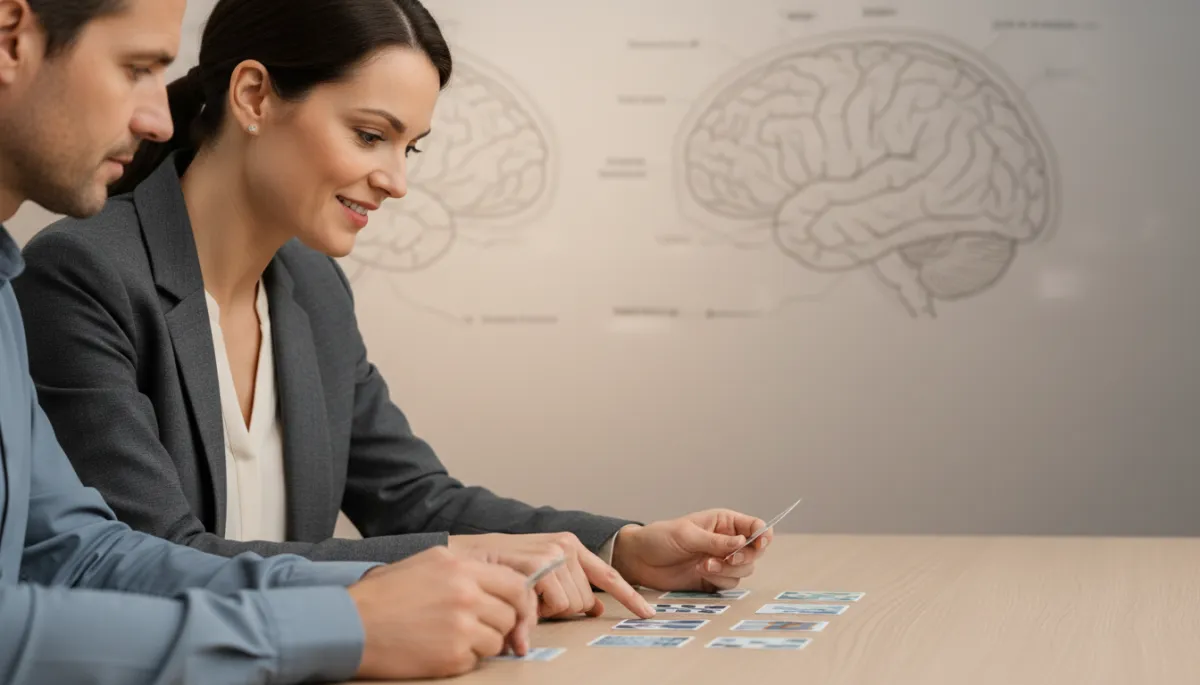
Targeted visual memory exercises can strengthen recall for words, faces, and daily tasks.
In vision therapy, we often use step-by-step activities—such as remembering sequences of shapes, grids of letters, or patterns of colored blocks—to train visual memory. These tasks are not just “games.” They are carefully designed to engage neural circuits that link visual processing areas with memory hubs. Over time, the brain becomes more efficient at noticing key details, organizing them, and retrieving them when needed.
Supporting Your Memory by Supporting Your Vision
Understanding vision’s vital role in memory changes how we approach learning, performance, and even aging. If you or a child struggle to remember what you read, follow multi-step directions, or recall information presented visually, it may be worth looking beyond “poor memory” and examining how the visual system is functioning. A comprehensive visual evaluation—beyond standard eyesight testing—can reveal hidden difficulties that interfere with efficient encoding and recall.
By investing in healthy visual processing—through appropriate lenses, vision therapy, and smart visual habits—we are, in effect, investing in our memory. When the eyes and brain work together smoothly, we do not just see the world more clearly; we remember it more clearly too. Vision is not only how we look at life. It is how life stays with us.


